Is sailing safe for children?
Sailing with children is genuinely safe when approached thoughtfully. Hundreds of thousands of families charter yachts every year without incident. The keys are choosing appropriate conditions (calm seas, sheltered anchorages), fitting proper safety equipment, establishing clear boat rules from day one, and — most importantly — choosing the right destination and boat type for your family's experience level.
Children adapt to boat life remarkably quickly. Within a day or two, most kids are moving around the boat confidently, helping with lines, and asking to take the helm. The combination of swimming, snorkeling, wildlife spotting, and the genuine adventure of arriving somewhere new by sea makes sailing one of the richest travel experiences available to families.
Best ages for sailing holidays
Babies (0–2): Possible with planning, but demanding. The lack of space, the motion, and the constant vigilance required make this an advanced challenge. Most sailing families wait until children can walk and follow basic instructions.
Toddlers (2–4): Manageable on a catamaran with a large, flat deck and netting between the hulls. Requires a tether system when underway. The Ionian Islands in light winds is the ideal first destination.
Children (5–11): The sweet spot. Old enough to follow safety rules, young enough to find everything magical. Can help with simple sailing tasks, snorkel confidently, and adapt easily to the daily rhythm of charter life.
Teenagers: Often the best crew members you'll have — enthusiastic, capable, and genuinely interested in learning to sail. Give them real responsibility and they'll reward you with genuine engagement.
Choosing the right boat
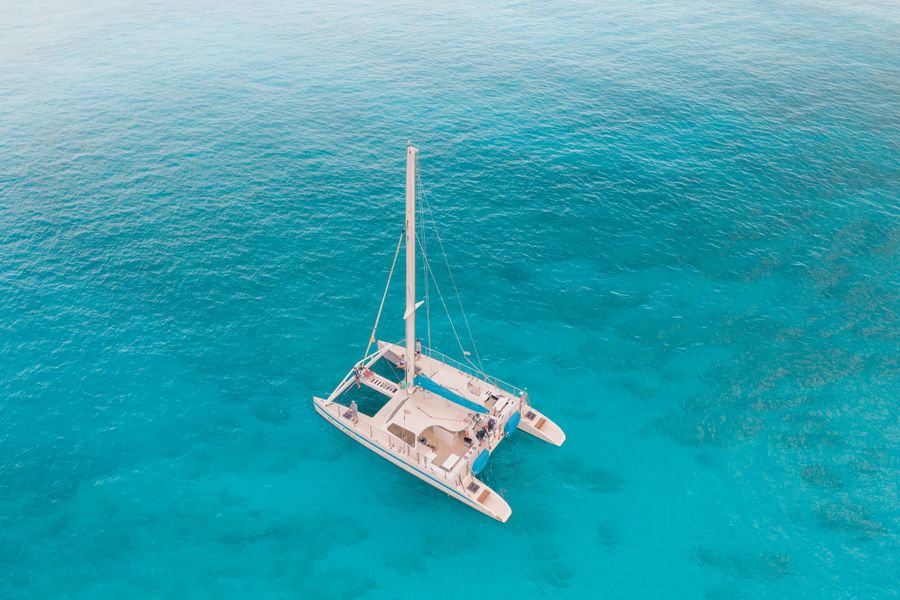
A catamaran is strongly recommended for families. The reasons are decisive: the flat deck provides a safe, stable platform; the wide space between the hulls (fitted with netting on most charter cats) creates a large, secure play area; the boat barely heels in normal sailing conditions; and the separate cabins give parents and children their own space. The motion at sea is significantly calmer than a monohull, dramatically reducing seasickness risk in children.
For families with older children (10+) who are comfortable with some heel and motion, a monohull is entirely viable and provides a better sailing education. But for first-time family sailing holidays with young children, a catamaran removes most of the anxiety.
Best destinations for families
The ideal family sailing destination has: short passages (under 3 hours), sheltered anchorages, warm and calm water for swimming, and interesting shoreside activities. The top choices:
Ionian Islands, Greece — the best beginner family sailing in the Mediterranean. Light winds, calm seas, beautiful anchorages, and Greek food that children love. Kefalonia and Ithaka in particular have excellent swimming bays. Base from Lefkada.
BVI & USVI — the world's best family charter destination. Flat water inside the Sir Francis Drake Channel, passages under 2 hours between islands, warm clear water, and the swimming pigs of the Bahamas nearby (if you extend the trip). Sandy Cay is a perfect beach day for children.
Croatian Dalmatian Coast — sheltered waters, beautiful national parks (Mljet), and the most child-friendly marinas in the Mediterranean. Hvar has excellent beaches. The maestral afternoon breeze provides reliable sailing without being overpowering.
Safety essentials
Non-negotiable items for sailing with children:
- Personal flotation devices (PFDs) — properly fitted, children's sizes, worn whenever underway and required when in the cockpit at anchor. The charter company supplies adult PFDs; bring your own properly-fitted children's PFDs from home.
- Tethers/harnesses — for children under 8, a tether attached to a cockpit jackstay keeps them secure underway. Many charter companies supply these; confirm before booking.
- Cockpit netting — request this when booking. Most modern charter catamarans have lifeline netting standard; add bow netting if sailing with toddlers.
- Sun protection — children burn faster at sea due to water reflection. 50+ SPF applied frequently, hats with neck covers, and UV rash guards for swimming are essential.
- Seasickness prevention — children are generally less susceptible than adults, but Dramamine (children's formulation), ginger chews, and a focus on the horizon all help. Avoid below-decks activities (reading, screens) when underway.
Keeping kids entertained
The boat itself is surprisingly effective entertainment — children who would normally need constant stimulation happily spend hours watching the water, spotting fish through the hull, and practicing knots. Supplementary activities that work well:
- Snorkeling — from age 5–6, snorkeling becomes a genuine activity. Practice in shallow anchorages before attempting reef snorkeling. The BVI and Ionian are both excellent for beginner snorkelers.
- Fishing lines — a simple trolling line off the stern provides hours of optimistic entertainment and occasional actual fish.
- Navigation involvement — give older children the job of plotting the course on the chart plotter, calling out distances to the next waypoint, and writing the log.
- Wildlife log — a notebook for recording dolphins, fish, birds, and marine life sightings creates genuine engagement with the environment.
- Watersports — kayaks and paddleboards are available on most charter catamarans. Book these in advance with your charter company.
Provisioning for children
Provision fully at the charter base supermarket before departure — island shops are expensive and limited. Stock familiar foods alongside local ones; this isn't the week to force adventurous eating on a seasick five-year-old. Key items: plenty of snacks (children's energy needs are high with all the swimming), individual water bottles (children are more likely to drink if they have their own), and simple cooking ingredients. Most sailing meals are simple — pasta, rice, fresh fish — which most children accept readily.