Choosing your destination
Your first sailing holiday destination should have three things: short passages (under 3 hours), sheltered water, and reliable but not overpowering wind. The world's two best options for first-timers are:
The BVI (British Virgin Islands) — the gold standard for first charters. Passages of 10–20 miles, the Sir Francis Drake Channel providing shelter from Atlantic swells, 15–20 knot trade winds, and outstanding infrastructure. The only downside: it's busy in peak season. January through March is ideal.
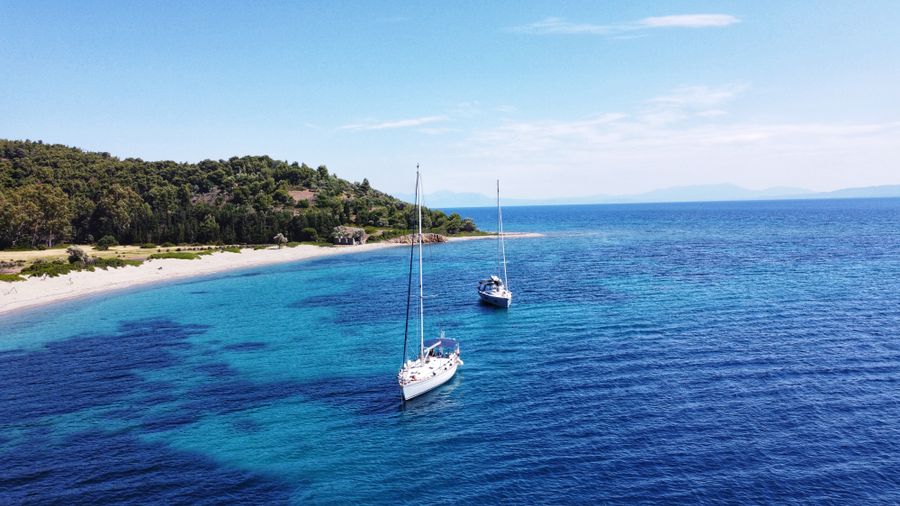
The Ionian Islands (Greece) — Europe's best beginner destination. Lefkada, Kefalonia, and Ithaka form a beautiful circuit with light, predictable winds, calm anchorages, and extraordinary Greek food. May, June, or September are perfect.
Avoid the Greek Cyclades (strong meltemi), the Brittany Atlantic coast (powerful tides), or the Strait of Bonifacio for your first charter. There's plenty of time for challenging sailing once you have your first season under your belt.
Choosing your boat
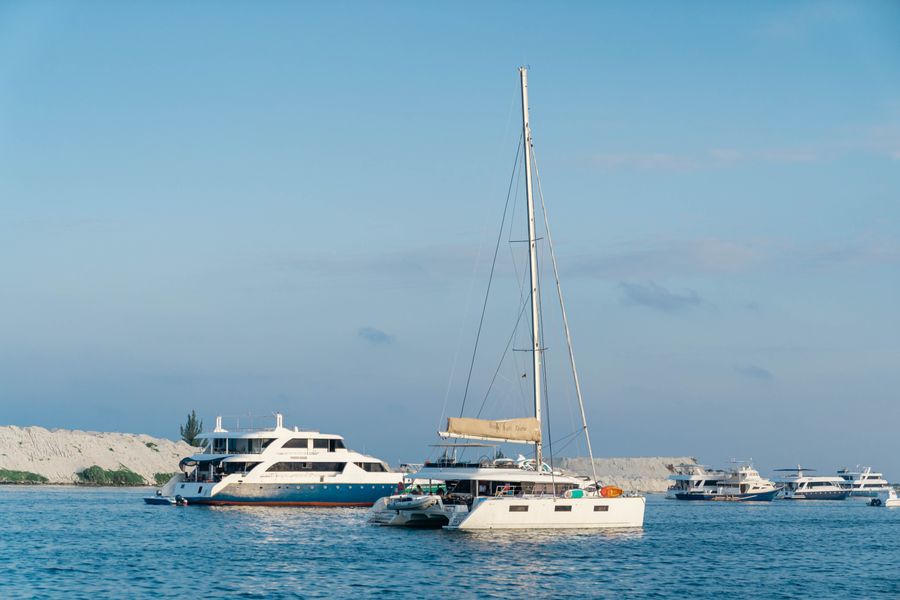
For most first-time charter sailors, a catamaran is the right choice. The stability means almost no seasickness, the wide deck provides space and security, and the separate cabins give everyone privacy. The downside: catamarans cost 40–80% more than equivalent monohulls.
If budget is a constraint, a 38–42ft monohull is perfectly comfortable for 4–6 people. Modern charter monohulls are stable and forgiving. Heel (the boat leaning to one side when sailing) can be disconcerting at first but becomes completely natural within a day.
For a group of 6 or more, or families with children, the catamaran's extra space is usually worth the premium.
Booking your charter
Book 6 months ahead for peak season (July–August Med, December–March Caribbean). Popular catamarans in BVI and Ionian sell out by March for the following winter season. When booking:
- Be honest about your sailing experience — charter companies assess competence, and overstating it means you get a boat too large for your confidence level
- Ask about flotilla options if your group has limited experience — a guided group is invaluable for first-timers
- Consider adding a skipper for the first day (most companies offer this) — having a professional show you around the boat and help with the first departure saves hours of stress
- Get damage deposit waiver insurance — it removes the anxiety of the $1,500–5,000 deposit held against accidental damage
What to bring
The golden rule: one soft bag per person, maximum 60 litres. Hard suitcases don't fit in boat lockers. Essentials:
- Non-slip deck shoes (white or non-marking sole) — essential, yacht-only
- Waterproof jacket even in summer — Mediterranean thunderstorms arrive fast
- Fleece or mid-layer for evenings at anchor
- High-SPF sunscreen in quantity (you burn faster on water)
- Seasickness tablets — take before you feel ill, not after
- Polarised sunglasses for helming
- Waterproof phone case
- Small waterproof daypack for going ashore
See our full sailing packing list for the complete checklist.
What to expect on board
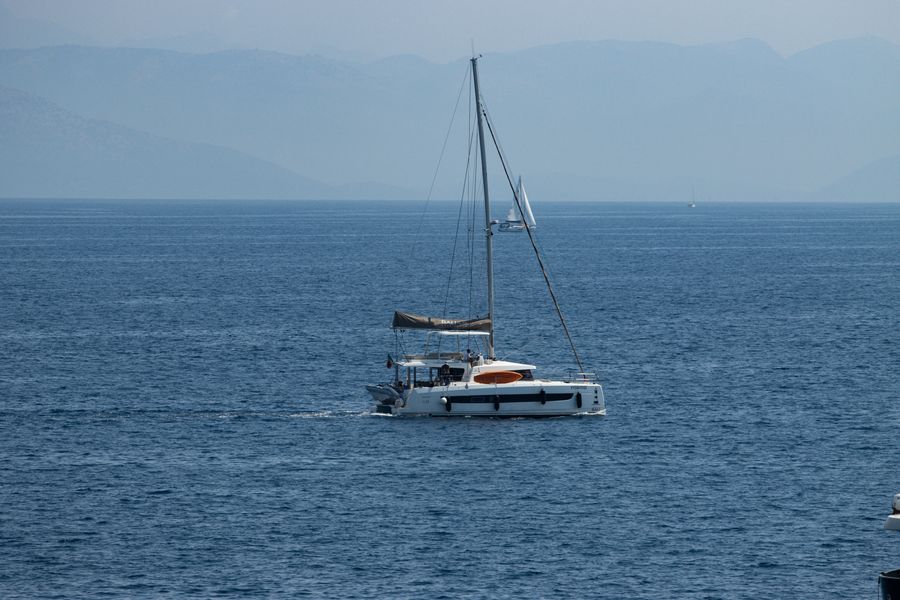
A week aboard a charter yacht has a natural daily rhythm that most people find immediately satisfying. Wake early (sunrise is extraordinary at sea), sail in the morning when winds are typically lighter and more manageable, arrive at your anchorage by early afternoon, swim and explore, eat well, sleep soundly with the sound of water against the hull.
Space: yacht cabins are compact by hotel standards but entirely comfortable for sleeping. The cockpit (the outdoor seating area at the back) becomes the living room — meals, drinks, and evening conversations all happen there.
Facilities: Charter yachts have a galley (kitchen), chart table, heads (bathrooms) with shower, and a VHF radio for communication. Power is generated by the engine and solar panels; budget use of electricity when anchored away from marinas.
Water: freshwater is limited — most boats carry 300–500 litres. Saltwater showers after swimming, freshwater rinse only. Buy fresh water at marinas to top up every 2–3 days.
Your first day sailing
The first departure from the marina is the most intimidating moment of the whole charter. It gets dramatically easier. Tips for day one:
- Assign jobs before leaving the dock — one person on the helm, one each on bow and stern lines, one watching for obstacles
- Leave early morning when the marina is quiet and winds are lighter
- Plan a short first passage (under 2 hours) to a straightforward anchorage — don't try to cover 40nm on day one
- Practice anchoring in a quiet bay before attempting a busy anchorage
- Debrief at the end of the day — what went well, what to improve tomorrow
Common beginner mistakes
Overpacking: The number one mistake. One soft bag per person. Everything else stays at home.
Over-ambitious itinerary: Your first charter is not the time to cover 200nm. Plan 20–30nm per day maximum. Leave time to explore ashore, swim, and simply enjoy being at anchor.
Arriving at anchorages too late: Popular anchorages fill up by early afternoon in high season. Leave your overnight stop by 0800–0900 and arrive at the next one by 1300 at the latest.
Ignoring the weather forecast: Check the forecast every morning. In the Mediterranean, afternoon winds are typically stronger than morning — plan departures accordingly.
Not reading the pilot book: Every sailing region has a pilot book with anchorage details, local hazards, and marina information. Buy it before you go. It's the most important thing in your bag after the sunscreen.