Overview
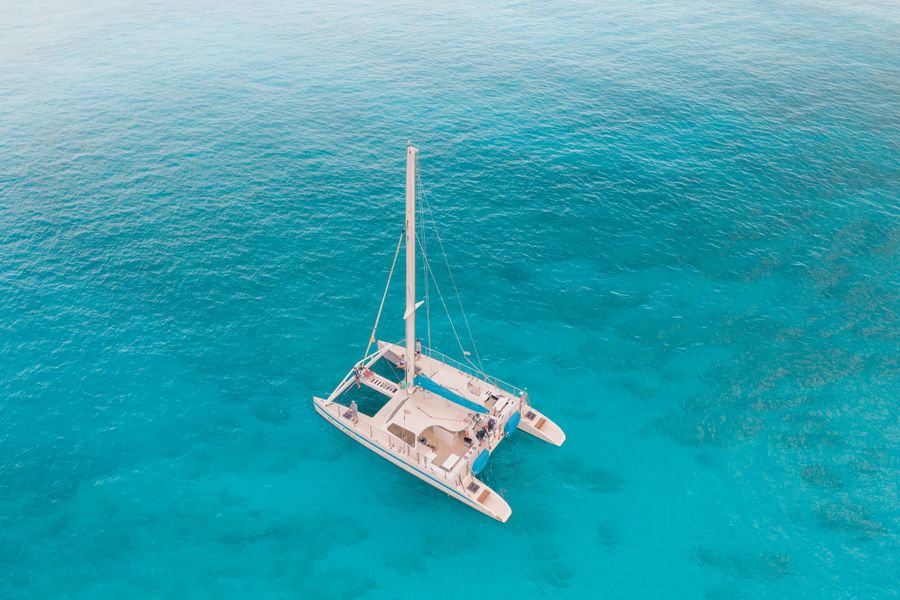
The US Virgin Islands (USVI) sit just 10 miles west of the British Virgin Islands, sharing the same trade winds, the same turquoise water, and much of the same sailing character — but with the distinct advantages of US territory status. American citizens don't need a passport, the currency is US dollars, marinas and provisioning meet US standards, and the charter infrastructure is excellent. The USVI is often overlooked in favour of the BVI, which is a mistake — St John's National Park in particular is spectacularly beautiful.

St Thomas
Charlotte Amalie, St Thomas's capital, is one of the Caribbean's largest natural harbours and the main charter base. The town is famous for duty-free shopping — electronics, jewellery, and rum at prices significantly below mainland US. The marina facilities (IGY Yacht Haven Grande, Crown Bay Marina) are first-class. Magens Bay on the north coast is consistently rated one of the world's most beautiful beaches. St Thomas is the arrival hub — international airport with direct flights from most major US cities.
St John & the Virgin Islands National Park
St John is the USVI's jewel. Two-thirds of the island is Virgin Islands National Park — completely undeveloped, with hiking trails, pristine beaches, and exceptional snorkeling. Trunk Bay (famous underwater snorkel trail), Cinnamon Bay, and Francis Bay are among the Caribbean's finest beaches. The mooring field in Cruz Bay is the main overnight stop; National Park Service moorings are available throughout the north coast bays ($26/night). No anchoring in the Park — use the NPS moorings only.
St Croix
St Croix, 40 miles south of St Thomas (a day's sail), is the USVI's most underrated island. Christiansted, the main town, has a beautifully preserved Danish colonial waterfront. The Buck Island Reef National Monument — an elkhorn coral barrier reef just offshore — has some of the best snorkeling in the Caribbean. St Croix is quieter, more local, and more authentic than the northern islands.
USVI vs. BVI
The USVI and BVI are complementary rather than competing destinations. The USVI is better for: US citizens (no passport), provisioning and marina facilities, flight connections, and the spectacular St John National Park. The BVI is better for: pure sailing (more islands, better wind angles), the Norman Island caves, and the overall sailing itinerary variety. Many charter sailors do a combined loop — USVI for the first 3–4 days, then clear customs and cross to the BVI for the remainder.
Best time to go
Same as the BVI — December through April is peak season, January through March has the most reliable trade winds. The USVI sits in the hurricane belt; avoid June through October.