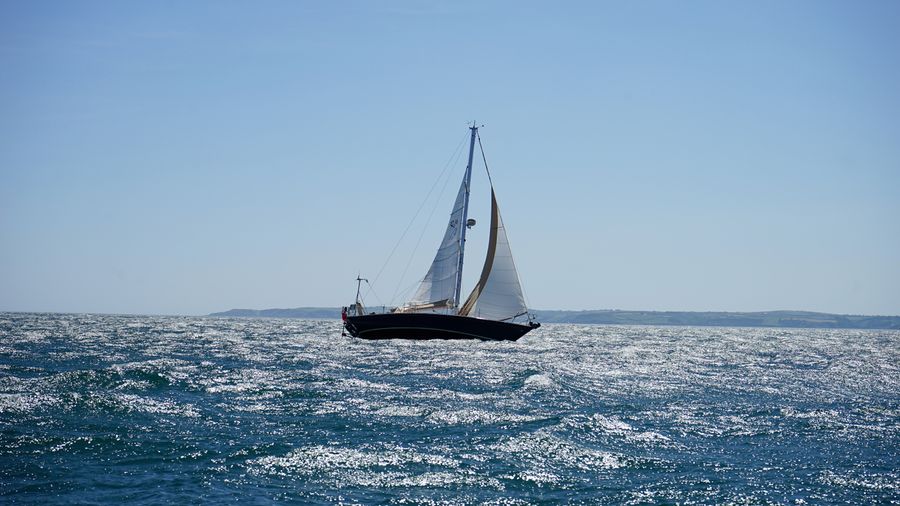
What is a nautical chart?
A nautical chart is a specialized map showing water depth, underwater hazards, buoys, lights, shipping lanes, and anchorages. Charts are produced by national hydrographic offices (the UKHO produces Admiralty charts; NOAA produces US charts) and updated regularly.

Depth and soundings
Depth is shown as soundings — small numbers scattered across the water. The reference level (Chart Datum) is the lowest astronomical tide. Contour lines connect points of equal depth.
Chart symbols
The most important: anchor symbol (recommended anchorage), wreck symbols, rock symbols, light characteristics, and restricted areas.
Buoys and markers
In IALA Region A (Europe), red buoys mark the port (left) side of a channel when entering from seaward; green buoys mark the starboard side. Cardinal marks — yellow and black — indicate which side of a hazard to pass on.
Plotting a course
Three steps: identify your position, identify your destination, draw a line between them. Check the line for hazards and adjust. Measure distance using the latitude scale (1 minute = 1 nautical mile).
Electronic charts
Most sailors use chart plotters alongside paper charts. The most popular systems are Navionics and C-MAP. Always carry up-to-date paper charts as backup — electronics fail.