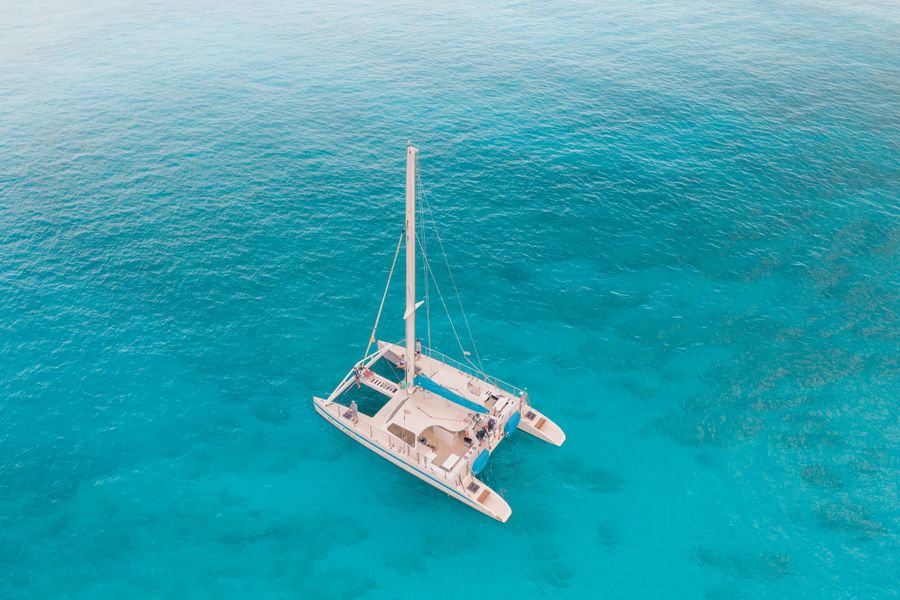
USVI sailing season at a glance
The US Virgin Islands share the same seasonal rhythm as the neighbouring BVI — December through April is the dry, trade-wind high season. St Thomas, St John and St Croix sit just west of the BVI, so the sailing conditions are near-identical, but you get the convenience of US territory: no customs clearance and direct flights from the mainland.
| Month | Conditions | Verdict |
|---|---|---|
| Dec–Feb | Peak, 15–20kt trades, dry, warm | Excellent — busiest, book ahead |
| Mar–Apr | Warm, dry, reliable wind | Excellent — a great sweet spot |
| May–Jun | Warmer, quieter, lower rates | Good — shoulder value |
| Jul–Oct | Hot, humid, hurricane risk | Caution — real storm risk |
| Nov | Season restarting | Fair — improving late-season value |
Weather & wind
Warm and stable through the winter, with easterly trade winds of 15–20 knots. The islands are close together with sheltered waters, and St John's Virgin Islands National Park protects much of that island's coastline with pristine, well-managed mooring bays. A popular option is to combine the USVI with the nearby Spanish Virgin Islands (Culebra and Vieques), which stay within US waters and avoid customs.
Hurricane season
Like all the Caribbean, the USVI sits in the Atlantic hurricane belt, June–November, peaking August–October. Rates fall in low season but the storm risk is real; December–April is the safe, settled window. Travel insurance with named-storm cover is wise for any shoulder-season booking.