Overview
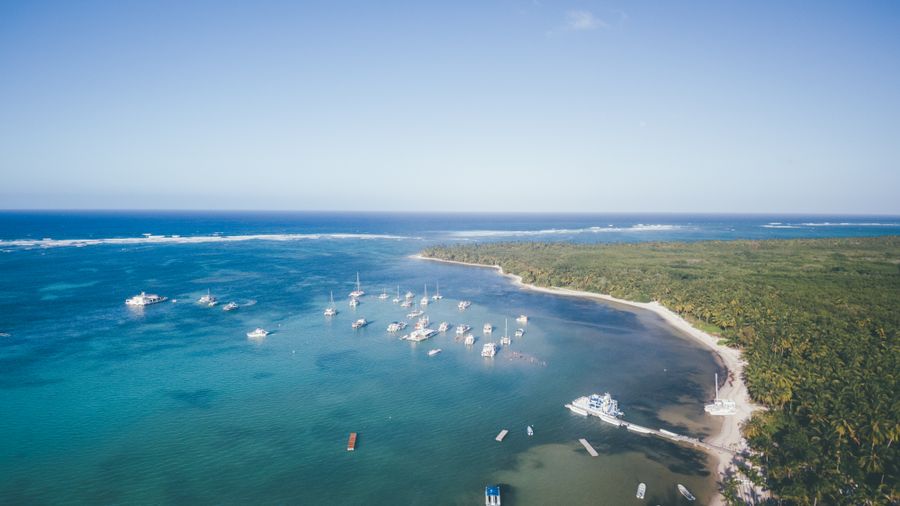
Belize is unlike anywhere else in the Caribbean. Instead of open-water passages between big islands, you sail the protected waters behind the Belize Barrier Reef — at roughly 185 miles, the second-largest reef system in the world after Australia's — threading between dozens of tiny sandy cayes with barely another boat in sight. It's a warm, shallow, reef-strewn playground with world-class snorkelling and diving quite literally over the side of the boat.
The trade-off for that beauty is that Belize rewards sailors who pay attention. The water is shallow, the cayes are low and hard to spot, and much of the navigation is done by eye rather than by chartplotter. It's not a beginner's bareboat destination in the way the BVI is — but for anyone with some experience, it's among the most rewarding cruising grounds anywhere.
The barrier reef & cayes
The reef runs the length of the country's coast, and the sheltered lagoon between it and the mainland is where most of the sailing happens. Scattered through that lagoon are the cayes — South Water Caye (part of a UNESCO World Heritage marine reserve), Tobacco Caye, Ranguana Caye, Coco Plum, Wippari, and dozens more, many no bigger than a sandbar with a few palms and a rustic beach bar. Anchoring off a deserted caye for the night, with the reef breaking in the distance, is the essence of a Belize charter.
The marine life is the headline act: more than 500 species of fish, 100 types of coral, plus rays, nurse sharks, turtles and dolphins. Snorkelling spots like Shark Ray Alley and Hol Chan Marine Reserve (near Ambergris Caye in the north) are world-famous.
Placencia & the base
Nearly every Belize charter begins in Placencia, a laid-back village on a narrow peninsula on the southern coast. This is where Laru Beya Marina sits, home to the main bareboat operators including The Moorings and Sunsail. The village itself is charming and walkable, with good provisioning, beach bars, and a genuinely relaxed Belizean-Creole atmosphere — a pleasant place to spend a night before and after the charter.
Because of the distance between Belize's northern grounds (around Ambergris Caye) and the southern cayes near Placencia, most one-week charters focus on one region — typically the south. Two-week itineraries can link the two.
The atolls
Beyond the barrier reef lie three of the Caribbean's only true coral atolls: Turneffe (the largest), Lighthouse Reef (home to the famous Great Blue Hole, a 300-metre-wide sinkhole beloved by divers), and Glover's Reef. These are extraordinary destinations — but they sit in open water outside the protection of the main reef, and charter companies generally require a local skipper aboard to sail to them. If the atolls are a priority, arrange this when booking.
The Certificate of Competency
Belize has one requirement that catches first-timers out: to bareboat charter here, every skipper must obtain a Temporary Certificate of Competency from the Belize Port Authority before the charter. It isn't a test — it's an application reviewed against your sailing experience — but it's a legal requirement for any yacht without a local skipper aboard, and your charter company will help you complete it in advance. Budget a little lead time for it when booking.
Sailing the skinny water
Belizean sailors talk about "skinny water" — the shallow, coral-studded lagoon that makes this such distinctive cruising. Depths are modest, the light and water clarity mean you often navigate by reading the colour of the water ahead, and published charts can be approximate. Passages between cayes are short, and the reef keeps the water flat, so it's rarely a rough sail — but it demands a watchful skipper and unhurried pace. Most crews find this becomes part of the pleasure rather than a chore.
Best time to go
The charter season runs November through April, coinciding with the dry season and its steady 15–20 knot easterly trade winds, warm days and settled weather. This makes Belize a natural winter-sun destination in the same bracket as the BVI, Bahamas and Grenadines. The rainy season (June–November) brings more humidity and the small but real Atlantic hurricane risk, peaking in August–September, when most charter activity pauses. For a fuller month-by-month breakdown, see our best time to sail Belize guide.